Exposure & Response Prevention (ERP)
What Is ERP?
Exposure and Response Prevention (ERP) is a highly effective behavioural therapy designed to help individuals confront and reduce anxiety-driven patterns—particularly those associated with Obsessive-Compulsive Disorder (OCD). ERP involves systematically exposing a person to feared situations or thoughts while preventing the typical avoidance or compulsive responses that reinforce anxiety. Over time, this reduces the power these fears hold and rewires the brain’s threat-response system.
How ERP Works
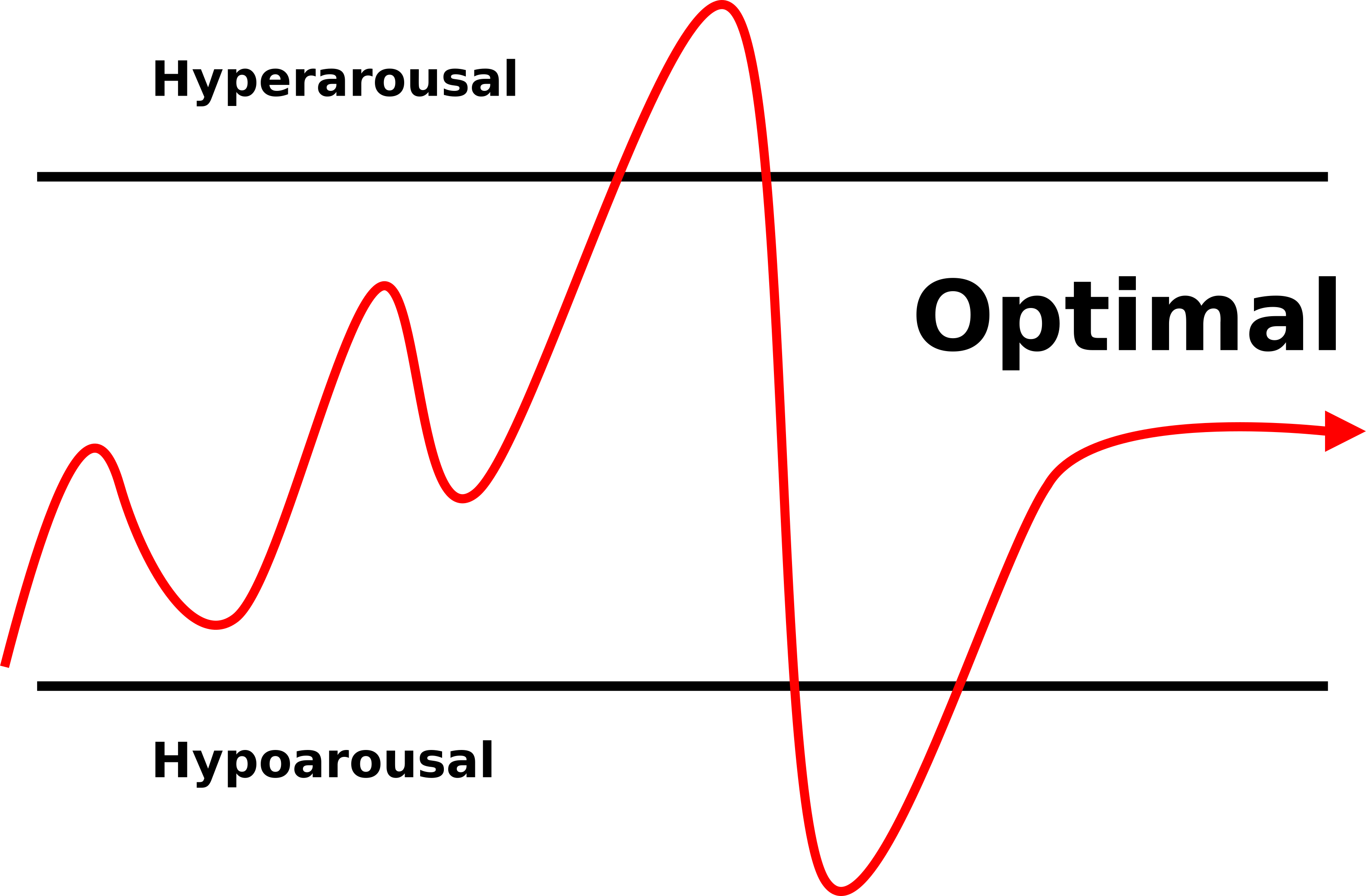
ERP operates on the principle of habituation: when we face what we fear without escaping or ritualizing, the anxiety gradually diminishes. Clients are guided through exposures that provoke discomfort (e.g., touching a doorknob without washing hands) while resisting the urge to perform compulsive behaviors. This breaks the anxiety-compulsion cycle and builds emotional resilience.
When Is ERP Used?
ERP is the gold-standard treatment for OCD, and it’s also used effectively for conditions involving avoidance, phobias, and health anxiety. Unlike talk-based therapies, ERP is active, experiential, and outcome-focused. It requires commitment but delivers measurable, long-term change by rewiring avoidance-based behavior patterns at the neurological level.
Experiential Avoidance vs. Exposure in ACT and ERP
Experiential avoidance refers to the tendency to escape, suppress, or control unpleasant internal experiences—such as thoughts, emotions, sensations, or memories—even when doing so causes harm in the long term. It lies at the core of many psychological struggles, including anxiety disorders and OCD.
Acceptance and Commitment Therapy (ACT) targets experiential avoidance by helping individuals build tolerance for discomfort rather than trying to eliminate it. Through skills like mindfulness, defusion, and values-based action, ACT teaches people to observe difficult experiences without getting entangled in them, increasing psychological flexibility.
Exposure and Response Prevention (ERP), by contrast, tackles avoidance behaviorally—by directly confronting feared stimuli and blocking escape or ritual responses. Both ACT and ERP aim to reduce avoidance, but they do so through different mechanisms: ACT focuses on how we relate to internal discomfort, while ERP focuses on what we do in response to external triggers. Combining both approaches can be especially effective, helping individuals not only face their fears but also expand their capacity to live meaningfully despite discomfort.
Learn More
- To understand how exposure therapy helps dismantle fear through structured and repeated contact with anxiety triggers, see Overcoming Your Fears with Exposure Therapy.
- To explore how your brain’s emotional systems interact—and why understanding these can enhance therapies like ERP—see Your Brain’s 3 Emotion Regulation Systems.
- For an in-depth look at how the brain’s threat system can fuel anxiety and compulsions, see Your Brain’s Threat System.