Deep Brain Reorienting (DBR)
What Is DBR?
Developed by Dr. Frank Corrigan, DBR works with the earliest physiological activation that occurs before conscious emotion or thought, often referred to as the initial orienting and shock response.
How DBR Differs from Traditional Therapies
Unlike cognitive or behavioural approaches that focus on thought restructuring or exposure, DBR engages the deepest levels of the nervous system. It traces somatic tension that precedes emotional reactivity, allowing clients to access and resolve the underlying shock-bound state without reliving the trauma cognitively. This makes DBR particularly effective for clients with attachment trauma, complex PTSD, or dissociative symptoms.
What to Expect in a DBR Session
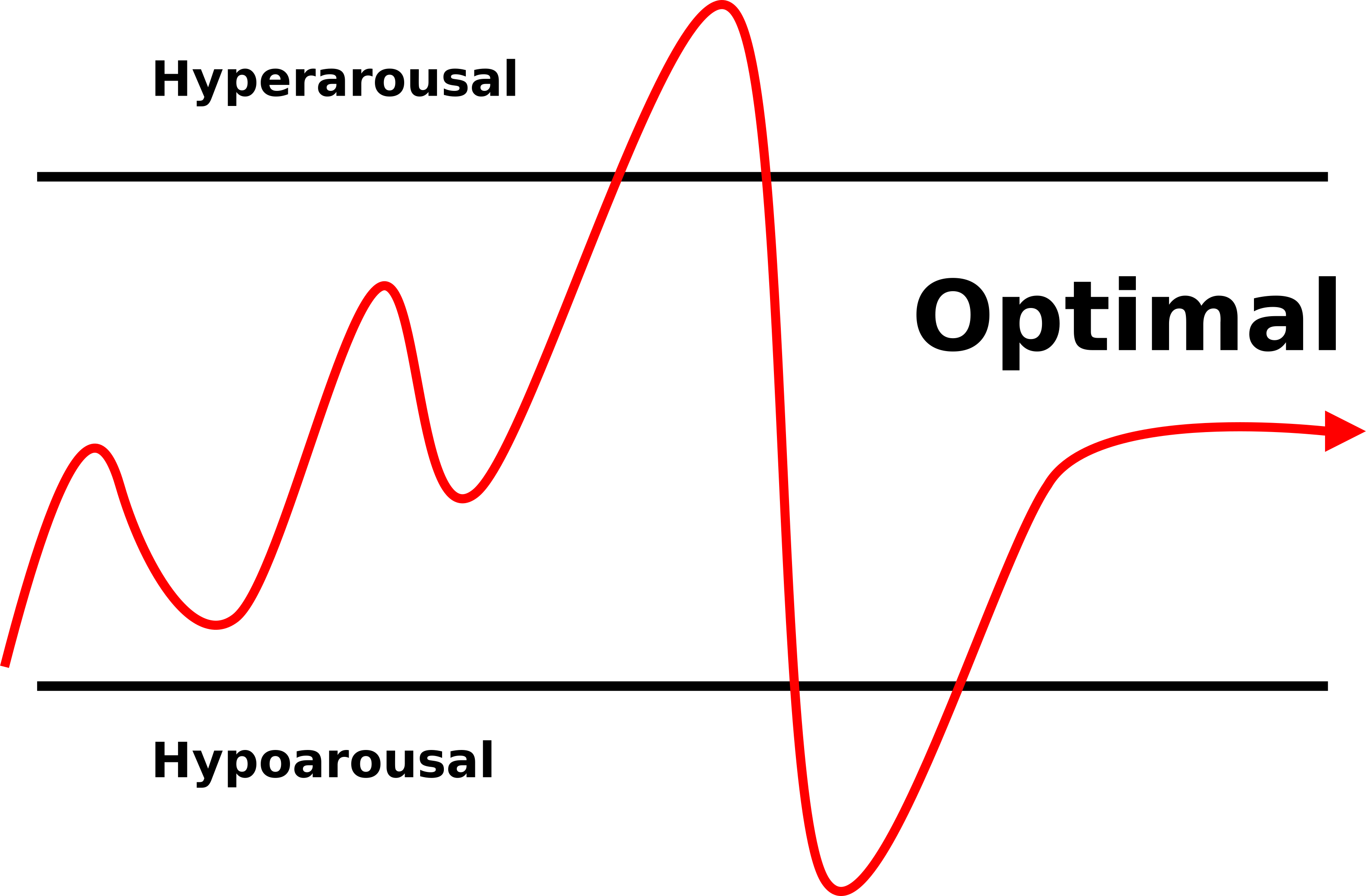
Sessions involve slowing attention inward to notice micro-level sensations—such as a subtle pulling, tightening, or orienting shift in the head or chest. These are tracked and named, with the therapist guiding awareness while maintaining a regulation window. As the underlying shock and emotion emerge, they are processed without retraumatization. This helps reorganize deep-brain patterns tied to unresolved threat and rupture.
How DBR Compares to EMDR Therapy
While both EMDR Therapy and Deep Brain Reorienting (DBR) target trauma at its root, they operate through fundamentally different mechanisms. EMDR uses bilateral stimulation (BLS)—typically guided eye movements—to process traumatic memories. In contrast, DBR bypasses the need for BLS entirely, working directly with the brainstem’s orienting and shock responses that occur prior to emotion or cognition. This allows DBR to access and resolve trauma at a deeper neurophysiological level. As a newer modality, DBR builds on the foundations of trauma resolution laid by EMDR, but does so with more precision and less cognitive intrusion—making it particularly effective for complex trauma, dissociation, and attachment rupture.
Learn More
- To explore how early attachment disruptions affect emotional regulation and relational patterns—key themes addressed in DBR Therapy—see How Attachment Affects Your Emotion Regulation & Relationships.
- To explore another effective trauma therapy that uses bilateral stimulation (eg left-right eye-movements) to process distressing memories, see Eye Movement Desensitisation and Reprocessing (EMDR) Therapy.