
How Attachment Styles Influence Therapy Outcomes:
A Summary of My PhD Research
Introduction
As part of my PhD at the University of Wollongong (completed in 2008), I conducted research examining “how therapy works”. Specifically, I sought to better understand why some people experience a rapid improvement in therapy irrespective of symptom duration or severity, whereas others progress more gradually.
At the time, researchers were largely focused on comparing therapies using symptom data, trying to prove their modality was superior. But this didn’t explain why therapy was highly effective for some people or why for others it sometimes didn’t work at all.
My research took things deeper: I analysed data from a clinical trial, to determine what was happening inside sessions between clients and therapists. I also explored the role of attachment and other interpersonal patterns, and how these influenced both the speed and depth of recovery.
This involved analysing transcripts from a group of participants who received a 16-session course of a manualised therapy.
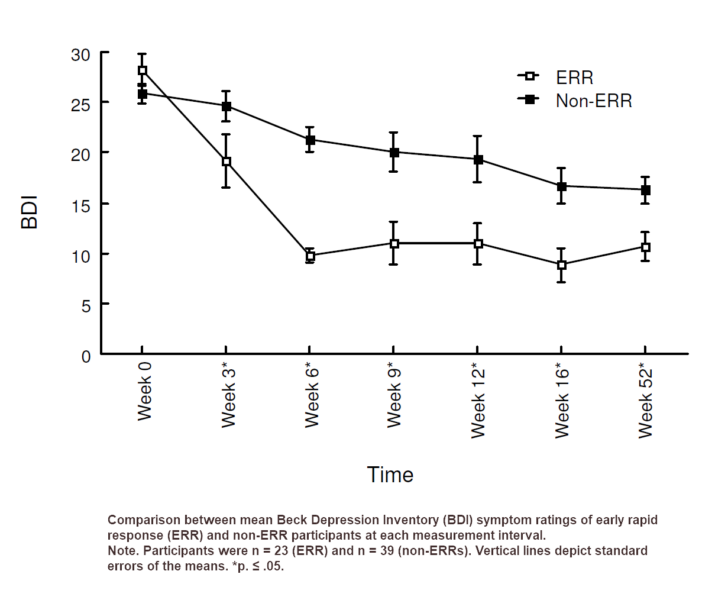
Key Findings
- Around one-third of participants showed early major improvement by Session 6 (a “rapid response”) and these benefits were still observable at 52 week follow-up.
- An analysis of therapy transcripts revealed that early rapid responders tended to be more willing to recognise, own, and process strong emotions early in therapy.
- People who progressed more slowly often presented with intimacy fears and defensiveness which was observable in the interactions between them and their therapists. Moreover, their pre-therapy scores on measures of attachment statistically predicted the speed of their response via these interactions.
- These differences were evident in therapy transcripts as early as Session 3, even when the therapeutic relationship appeared strong (it was rated as both high and equivalent rated by participants, therapists, and independent observers).
- Despite high therapeutic alliance ratings, participants who progressed more slowly had a characteristic style of emotional avoidance that differed significantly from people who responded rapidly which was evident early in therapy.
- In other words, a strong therapeutic alliance does not necessarily mean that a person can make full use of it to facilitate therapeutic change. Some people may need extra help to “make use” of the therapeutic relationship and lean into the emotional work of therapy.
Why This Matters
These findings build on decades of attachment research and continue to shape my approach today, helping me tailor therapy to each person’s attachment style and relational needs.
This guides my attention to the patterns and processes unfolding within therapy itself: what’s happening moment-to-moment in the relationship, how emotional states are stored and expressed in the body, and how early trauma can shape brain processing in ways that leave people stuck in reactive, protective responses.
Good therapy can help bring awareness to these processes and support change at both the relational and neurobiological level.
Understanding how we relate to others—including our therapist—can allow us to better understand ourselves and work towards making relationships feel safer. Learning to recognise and work with these patterns in therapy can help us get the most from the therapeutic process, while developing ways of relating to ourselves and others that can carry into the rest of our lives.
From Research to Hope
My PhD research aligns with both earlier findings and the direction of many of today’s most transformative therapies. What’s promising is that we now have approaches that don’t just manage symptoms; they work on healing from the inside out.
‘Attachment’ is not just about how we relate to others; it’s also about how we relate to ourselves.
Through awareness of our internalised attachment systems, we can begin to offer ourselves the kind of safety, compassion, and reassurance that a secure caregiver would provide, even if those experiences were missing in childhood. These are not fixed traits; they are skills and practices that can be learned.
Much of my work involves helping people recognise and shift these patterns—cultivating a more supportive, compassionate relationship with themselves.
A key concept here is the idea of an introject, a mental representation of someone else (often a caregiver) that becomes internalised and then shapes how we treat ourselves. These internal working models can become critical, harsh, or neglectful, especially if our early experiences were unsafe or inconsistent.
Therapies such as EMDR Therapy when combined with Imagery Rescripting (IMRS) can directly target much-needed emotionally corrective experiences while helping people develop the capacity to turn towards themselves with greater care, support and compassion. Over time, this can help build a stronger internal sense of nurturing, protection and emotional security.
Healing from the Inside-Out
Although we can’t change the past, we can change the way it impacts us—including healing how we relate to ourselves. Many of the latest therapies and interventions are designed to do exactly this. These include:
- EMDR (Eye Movement and Desensitisation Therapy)
- Imagery Rescripting (IMRS)
- Compassion Focused Therapy (CFT) & Compassionate Mind Training
- DBR (Deep Brain Reorienting)
- Parts Work (eg Resource Therapy, IFS, EGO State work)
These approaches support us working with our internal parts, our inner relational patterns, and in healing emotional wounds that are often carried silently from early life. They provide pathways to healing that are experiential, relational, and deeply reparative.
You can read more about these therapies here.
Learn More
If you’d like to explore the findings in more detail or request a copy of the research abstract, you’re welcome to get in touch or mention it during our work together.
I’ve also written self-help articles related to this research, including:
These insights are aimed at helping you shape a personalised, attachment-informed approach to care that meets you where you are, and supports meaningful, lasting change.
Ready to Take the Next Step ?
Andreas is currently accepting new clients for online therapy.
Get in touch to discuss your goals.
Andreas will respond personally and guide you through the next steps.
Self-Help Tools:
Practical articles designed to help you better understand & address common challenges.
Evidence-based tools to support your psychological wellbeing.
Explore Self-Help Tools:
Request an Appointment:
Appointment Enquiries

Online Psychology Services, Sydney & Australia-wide